Last updated on October 31st, 2026 at 09:01 am
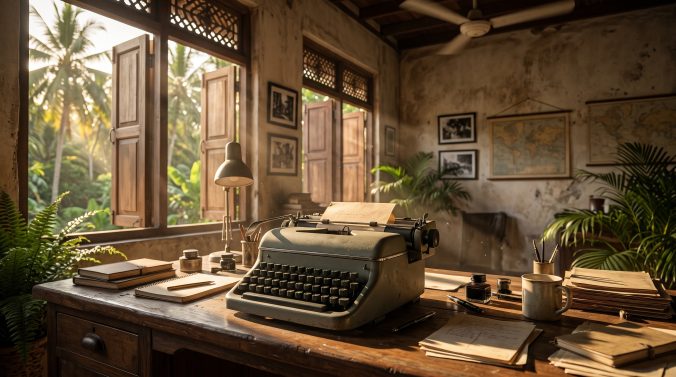
If you were navigating the bustling corporate offices of Kuala Lumpur in the late 1960s, you would have heard the relentless clatter of Olympia, Royal, and Brother typewriters. But one robust Indian-made machine quietly revolutionized Malayan workspaces.
.The Godrej typewriter arrived as a symbol of post-colonial Asian industrialism, outfitting the rapidly growing businesses along Jalan Tuanku Abdul Rahman. While these heavy mechanical beasts are long gone from modern desks, a dedicated underground network of Kuala Lumpur vintage collectors still hunts for them today.
Disclosure: We may earn a commission from bookings made through these links.
The Asian Industrial Shift: Breaking the Western Monopoly
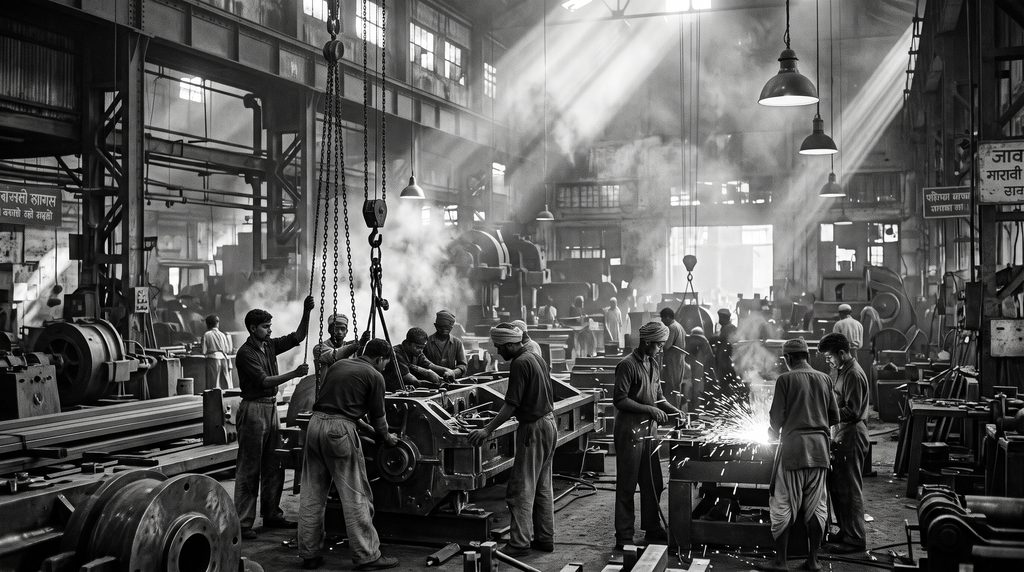
To understand how a heavy iron typewriter from Mumbai ended up on the desks of Kuala Lumpur executives, you have to look at the massive geopolitical shifts following World War II.
By the time Malaya achieved independence in 1957, the commercial sector was expanding at a breakneck pace.
Tin and rubber wealth fueled a new class of trading companies. These new businesses required modern office infrastructure, from steel filing cabinets to heavy-duty communication tools.
At the time, the global typewriter market was entirely dominated by Western manufacturers.
What typewriter brand would you have bought if you had wanted to run an office in the 1940s and 1950s? You would have bought an American Remington, a German Olympia, or an Italian Olivetti.
Remington would have been your top pick. It had essentially captured the Asian market early. It had secured massive market share by offering localized typewriters in scripts like Marathi, Urdu, and Arabic as early as 1910.
But as nationalism swept across a newly independent India in 1947, the country sought to break its reliance on imported Western technology. The Indian government was pushing for a domestically produced machine.
In 1948, the industrial powerhouse Godrej & Boyce rose to the challenge.
They were already famous for manufacturing impenetrable steel locks and massive bank vaults. Translating that heavy-metal engineering into the precision mechanics of a typewriter was no mean task.
It took years of painstaking research and development to perfect the hundreds of microscopic moving parts required for a smooth typing action.
Finally, in 1955, the project took off.
Godrej launched the Godrej Prima. This was a monumental achievement. Godrej officially became the first company in all of Asia to manufacture typewriters on a massive commercial scale.
As Malaysia formed in 1963 and the economy accelerated, cross-border trade with India deepened. Malaysian procurement managers quickly realized they did not have to pay exorbitant premiums for European typewriters shipped in from London or Berlin.
They could source incredibly durable, high-quality, Asian-made machines directly from Mumbai. With that, the Godrej typewriter officially entered the Malaysian market.
4 Forgotten Details of the 1960s Godrej Operation in Malaysia
The Godrej footprint in Malaysia extended far beyond a few imported machines. They built a localized industrial presence that helped shape the physical offices of early modern Malaysia.
1. The Jalan Tuanku Abdul Rahman Headquarters
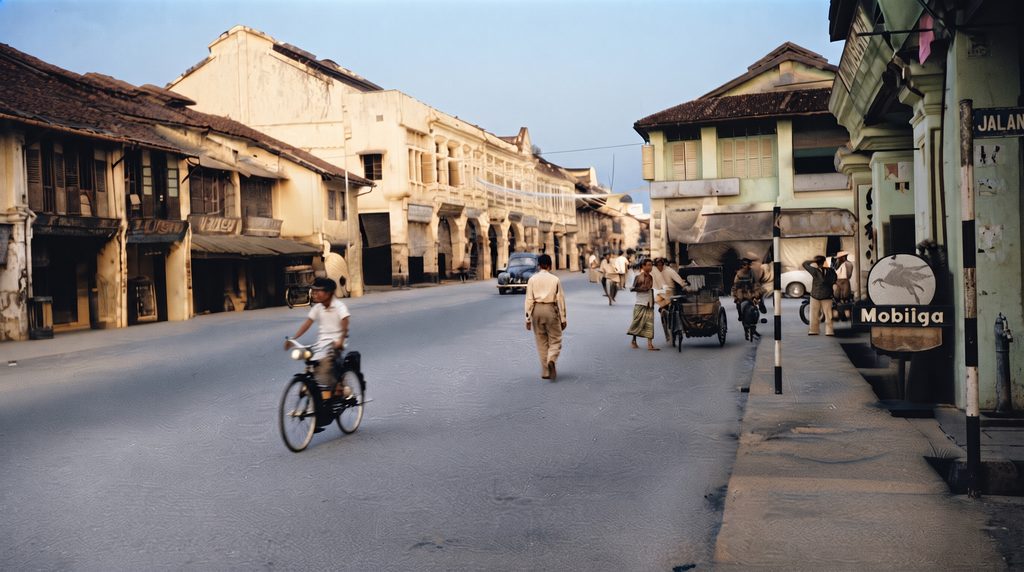
In the 1960s, Jalan Tuanku Abdul Rahman (formerly known as Batu Road) was not the textile and fabric haven it is today. It was the beating commercial heart of Kuala Lumpur.
Godrej (Malaysia) Sdn Bhd established its headquarters right in the center of the action at 106, Jalan Tuanku Abdul Rahman. From this prime real estate, they supplied the growing banks, legal firms, and trading houses sprouting up across the capital. If you were a Malaysian secretary or clerk in 1969, there was a high probability you walked past their storefront to check out the latest office technology.
2. The May 1969 Straits Times Advertisement
We know exactly how Godrej marketed its machines to the Malaysian public thanks to historical newspaper archives.
On May 14, 1969, an advertisement ran in the Straits Times explicitly targeting local businesses. It pitched the Godrej Typewriter for “Increased Typing Efficiency.” The ad highlighted highly advanced features for the era. The machines offered the interchangeability of carriages of different widths, allowing typists to switch from standard letters to massive financial ledgers.
It also boasted a spaced-typing key for automatic double-spacing, instant single-lever tabulation clearance, and a choice of eight different type-faces. These machines were built for intense, all-day secretarial labor.
3. The Larkin Industrial Estate Steel Expansion
Godrej Malaysia knew that selling typewriters was just the beginning.
Every new office that bought a typewriter also needed somewhere to store the sensitive documents they typed. Leveraging their history as master locksmiths, Godrej expanded aggressively into heavy office furniture. They sold indestructible steel chairs, filing cabinets, and heavy-duty commercial safes.
To keep up with Malaysian demand, they did not just import goods. They opened a local manufacturing footprint. Godrej undertook major steel fabrication jobs at their dedicated factory located in Jalan Asas within the Larkin Industrial Estate in Johor Bahru.
4. The 2011 Global Closure and Modern Pivot
The mechanical typewriter era could not survive the digital revolution.
As desktop computers flooded Malaysian offices in the late 1990s, the demand for physical typewriters plummeted. Godrej slowed production globally. Finally, in 2011, the company closed its legendary typewriter manufacturing plant in Mumbai.
When the plant shuttered, they had exactly 500 machines left in stock. The very last manufactured Godrej typewriter sold for roughly INR 12,000, marking the definitive end of Asia’s original typewriter era. Today, Godrej Malaysia still exists, but they have completely pivoted away from heavy steel and mechanical tech. If you look them up now, they strictly distribute consumer goods like soaps, toiletries, and detergents.
Finding 1960s Tech Today: The Insider Vintage Guide
If you want to experience the heavy, tactile satisfaction of 1960s analog technology in Kuala Lumpur today, you cannot go to a standard museum. You have to dive into the local collector’s scene.
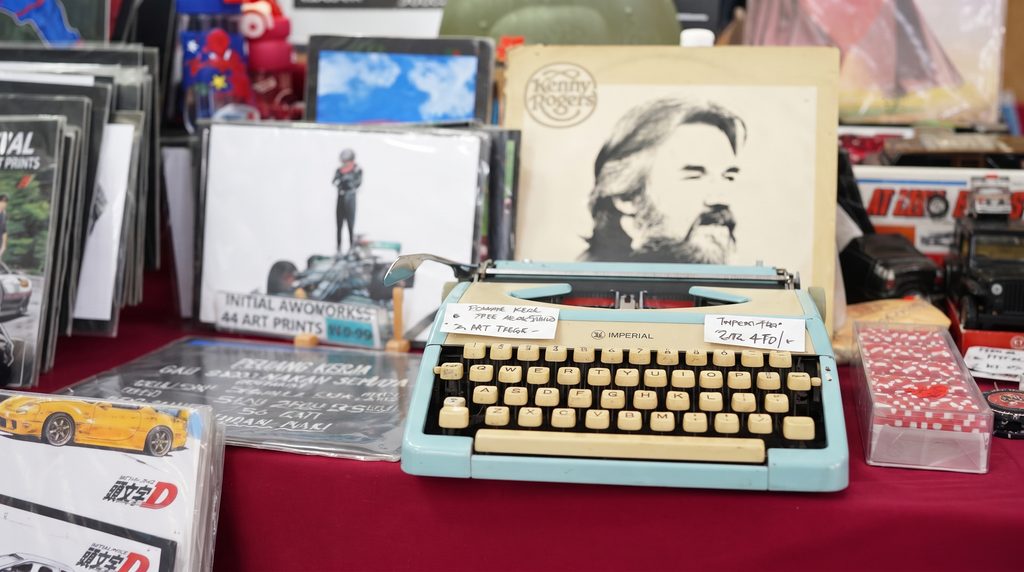
The ultimate insider secret for tracking down vintage typewriters—including surviving Olympias, Remingtons, and occasionally a rare Godrej—is the weekend flea market at Amcorp Mall in Petaling Jaya.
Every Saturday and Sunday, the lower ground floors of this unassuming shopping center transform into the largest antique and vintage market in Malaysia. Independent collectors drag heavy trunks of restored typewriters, vintage cameras, and analog sound equipment to sell to younger generations seeking that specific retro aesthetic.
How to Visit the Amcorp Mall Flea Market (2026 Guide):
- Location: 18, Jalan, Persiaran Barat, Pjs 52, 46050 Petaling Jaya, Selangor.
- Transport Route: Skip the weekend traffic. Take the LRT Kelana Jaya Line and exit at the Taman Jaya LRT Station. The mall is a direct 3-minute walk across the street from the station exit.
- Opening Hours: The market strictly runs on Saturdays and Sundays. Sellers start setting up around 10:00 AM, but the best time to hunt for restored typewriters is between 11:30 AM and 3:00 PM.
- Expected Costs: Entry is free. If you are looking to purchase a fully restored, working 1960s typewriter, expect prices to range from RM 400 to RM 1,200 depending on the brand, condition, and rarity.
Always test the carriage return, the spacebar tension, and the ribbon advance mechanism before purchasing a vintage machine. If you are visiting Malaysia as part of an extended stay, this is a highly recommended weekend excursion—especially for expats exploring MM2H retirement suitability who want to furnish their new homes with authentic local history.
Where to Stay, Eat & Shop Near KL’s Vintage Hubs
If you want to base your Kuala Lumpur trip around historical architecture and vintage exploration, skip the sterile modern high-rises and book a stay in a restored heritage property.
The original Godrej headquarters was on Jalan Tuanku Abdul Rahman. You can stay right in this historic district by booking a room at The Chow Kit – An Ormond Hotel. This award-winning property masterfully blends modern boutique property restoration with the moody, nostalgic aesthetics of 1960s Kuala Lumpur.
For a slightly more luxurious option in the adjacent heritage neighborhood of Dang Wangi, book a few nights at Hotel Stripes Kuala Lumpur. It offers incredible expat neighborhood appeal, placing you within walking distance of KL’s oldest remaining colonial shophouses and traditional kopitiams.
If you are planning to haul a 15-pound vintage typewriter back to your home country, ensure you have comprehensive travel insurance to cover any potential baggage damage during transit.
Finally, if you want to bring the 1960s Malaysian aesthetic to your home office without carrying heavy machinery, you can easily order vintage-style mechanical keyboards and retro desk mats directly through local e-commerce platforms to achieve the look with modern convenience.
Frequently Asked Questions (People Also Ask)
Did Malaysia ever manufacture its own typewriters? Malaysia did not manufacture its own domestic typewriter brand. Instead, it relied heavily on importing global brands like Olympia and Brother, while Indian manufacturers like Godrej established local distribution and steel fabrication facilities in Johor Bahru.
What happened to the Godrej typewriter company? Godrej stopped manufacturing typewriters in 2011 when they closed their final plant in Mumbai due to the dominance of computers. Today, Godrej (Malaysia) Sdn Bhd still operates, but exclusively trades in consumer goods like soaps and detergents.
Where was the original commercial district in 1960s Kuala Lumpur? In the 1960s, Jalan Tuanku Abdul Rahman (Batu Road) was a massive hub for corporate suppliers, legal firms, and international traders. Today, it is famous primarily as a bustling textile and traditional Malay clothing district.
Can you still buy vintage typewriters in Kuala Lumpur? Yes. The best place to find fully functional, restored vintage typewriters in Malaysia is the weekend flea market at Amcorp Mall in Petaling Jaya, easily accessible via the Taman Jaya LRT station.
Leave a Reply